
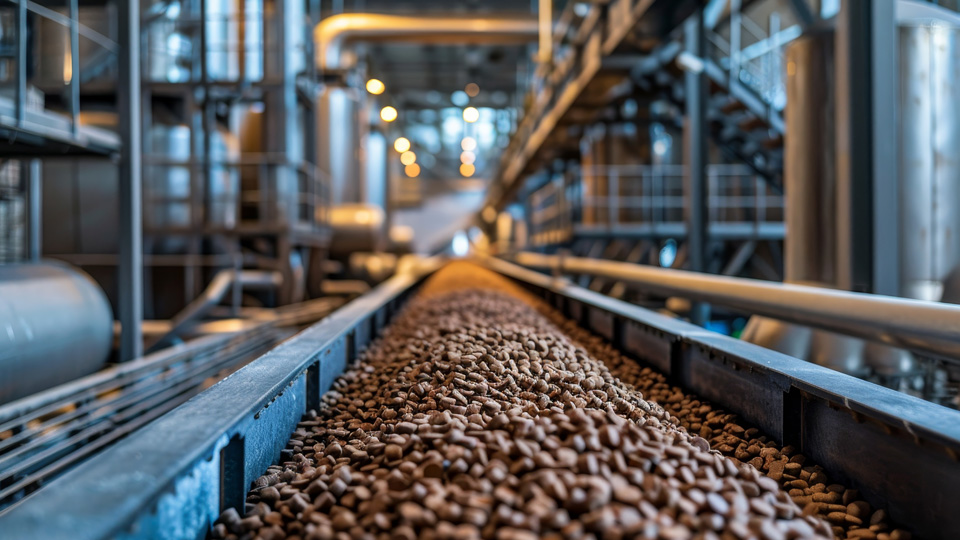
Biobased Products
Bioproducts research at RBI builds on decades of experience collaborating with pulp and paper manufacturers – extending today into a broad array of industries interested in creating value from forest and agricultural materials. The spectrum of bioproducts research at RBI spans operational excellence of existing pulp and paper manufacturing assets to creating new products. RBI is helping companies become more efficient and cost effective in their operations – and develop value added products for the future.
Our current research focuses on cellulosic nanomaterials derived from natural resources that can be used alone or in combination with other materials. Bioproducts under development include composite materials, low-cost carbon fibers, barrier films, aerogels, materials for 3-D printing and coatings. Beyond bioproducts, we are examining how the inclusion of bio-based materials can be a platform for tailoring product performance.

Value-Added Chemicals
At RBI, we are developing new process technologies to improve the production of value-added chemicals from biomass. We are working along the value chain from the initial conversion of woody plant material into fiber, cellulose components and lignin, and into common precursor molecules such as lignin monomers and sugars. Our faculty is working on technology and economic innovations in chemical catalysis, biocatalyst engineering, biological engineering, fermentation and downstream processes to upgrade the precursors molecules into biofuels, commodity chemicals, polymer monomers and pharmaceuticals.
Chemical Bioprocessing
At RBI, we are interested in addressing the fundamental and manufacturing challenges for future high margin/high volume products from biomass, with a traditional focus on forest biomaterials. Our faculty focuses on both conversion and separation of biomass compounds. For example, we work along the lignocellulosic conversion pathway with faculty interested in recovering lignin prior to pulping, in cellulose conversion, and in lignin separation from black liquor and subsequent conversion. We have strengths in catalytic processing of biomass and in biochemical separation, as well as fundamental modeling of reactions of biomass compounds.